Design Discovery Virtual
Co-Founder & Systems Designer
2020–2021
Designed the curriculum and pedagogical framework to successfully scale Harvard's rigorous design education into a digital-native platform for global cohorts.
The Goal: Bringing the Harvard studio to a global audience.
I co-founded a global program to teach graduate-level design online. We treated remote learning as a digital-native environment, not just a "video version" of a physical classroom.
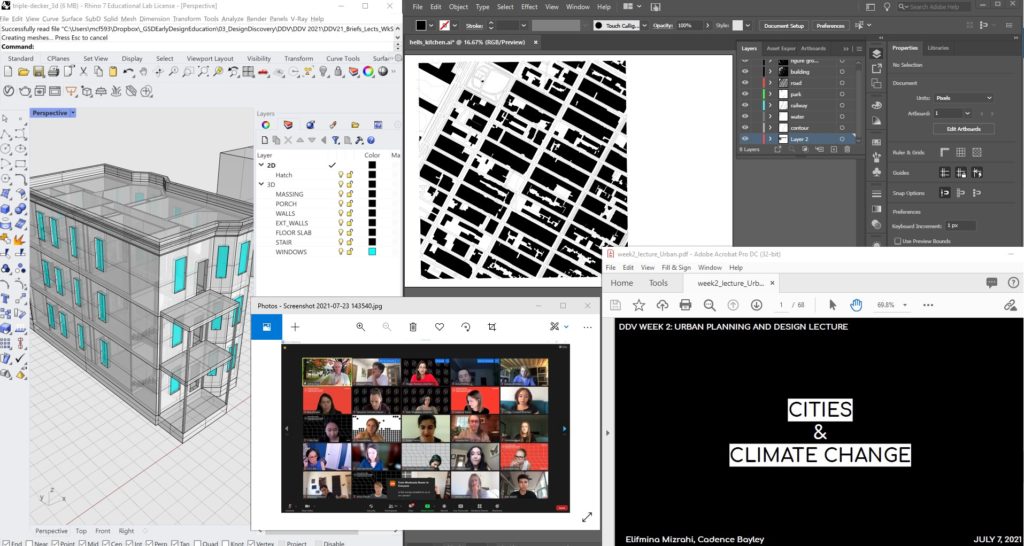
The Problem: Solving the "one-on-one" bottleneck.
Design is usually taught through one-on-one critique, which is impossible to scale. We needed to provide high-quality training to hundreds of people at once without losing the rigor of a Harvard studio.
The Framework: 27 (3x3x3) unique challenges in three weeks.
I built a "3x3x3" framework that rotated disciplines, topics, and scales every day. This generated 27 distinct design environments, providing the precise scaffolding students needed to rapidly adopt complex tools like Rhino and Illustrator through structured 'learning by doing.'
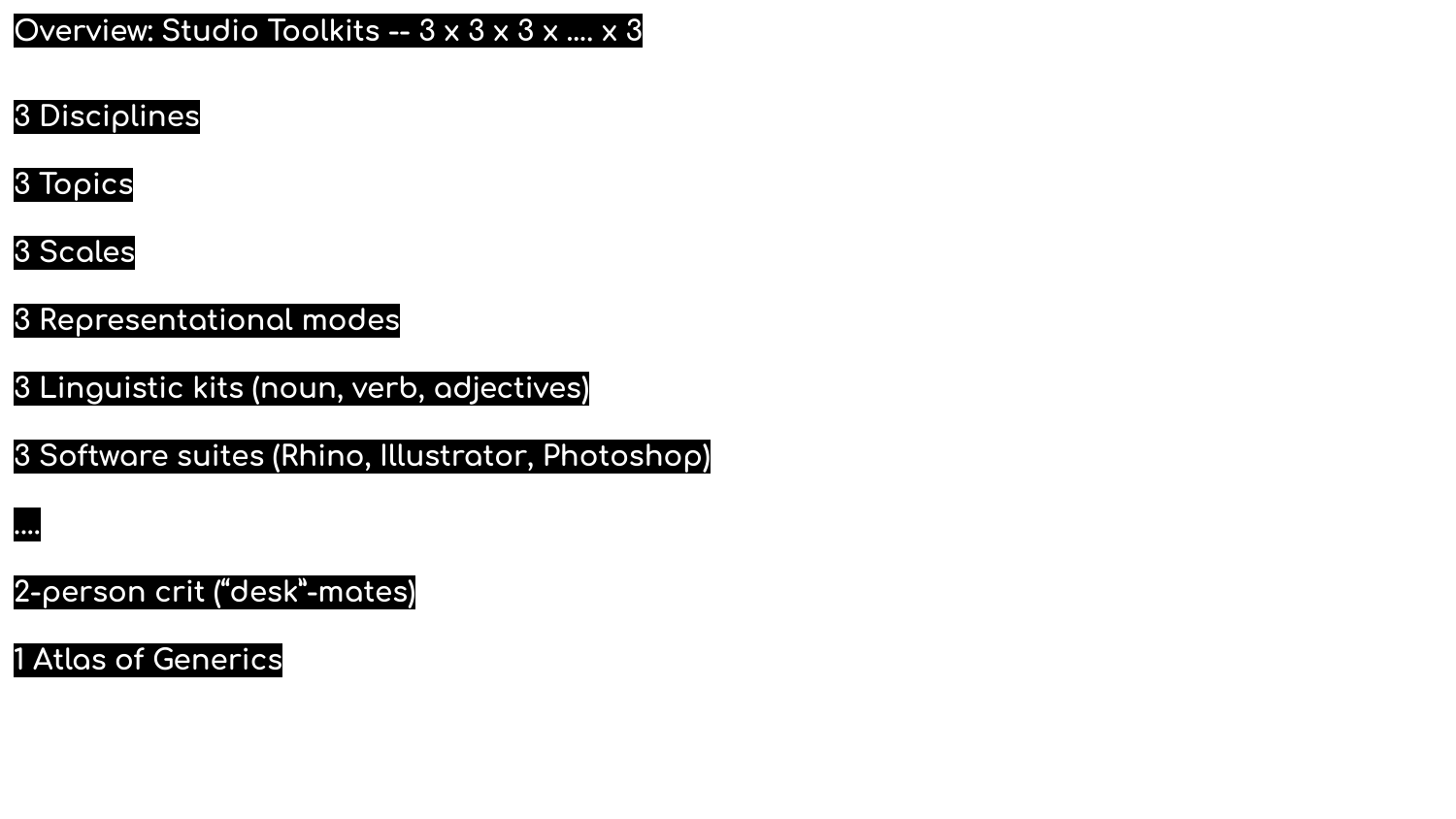
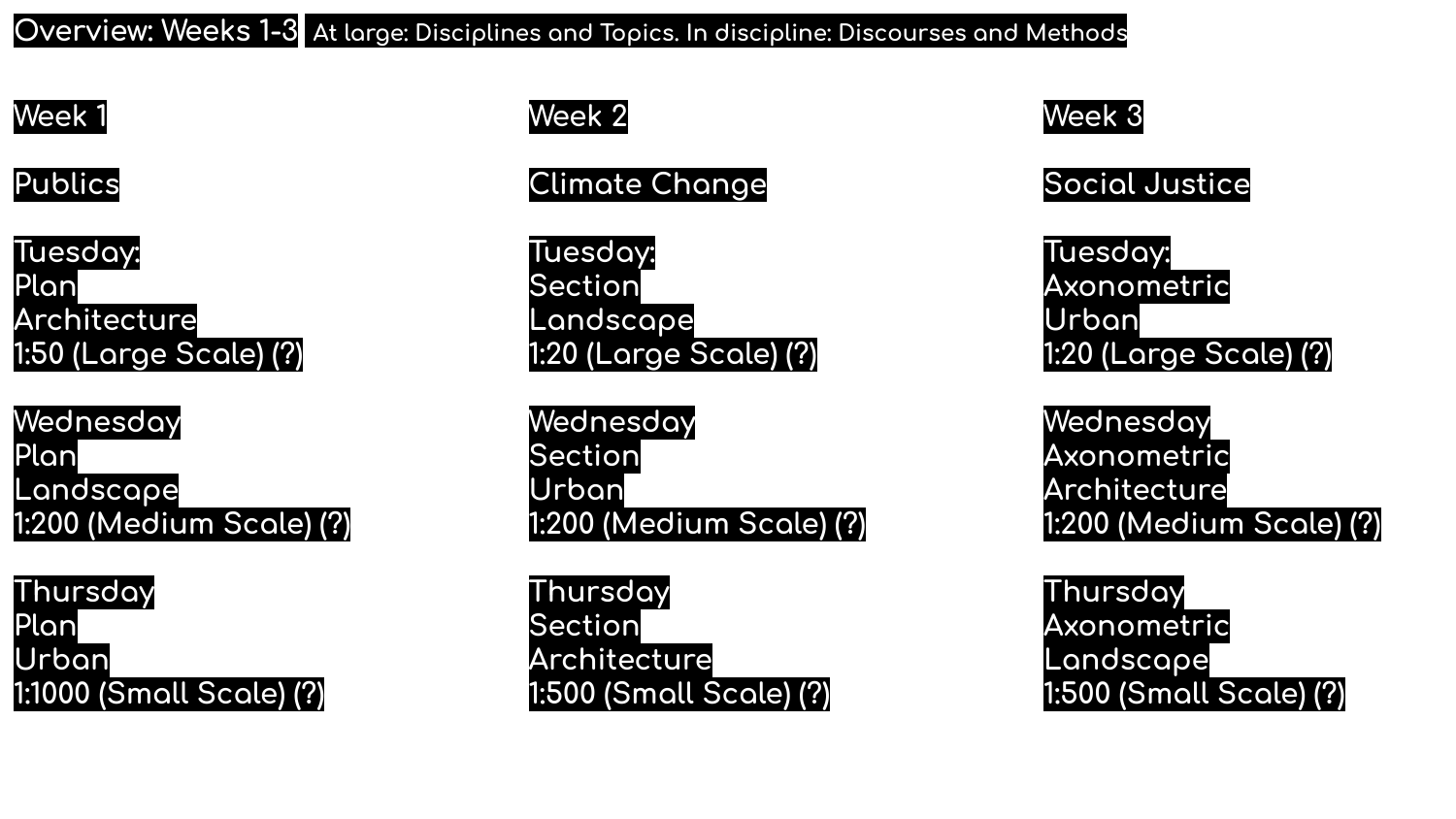
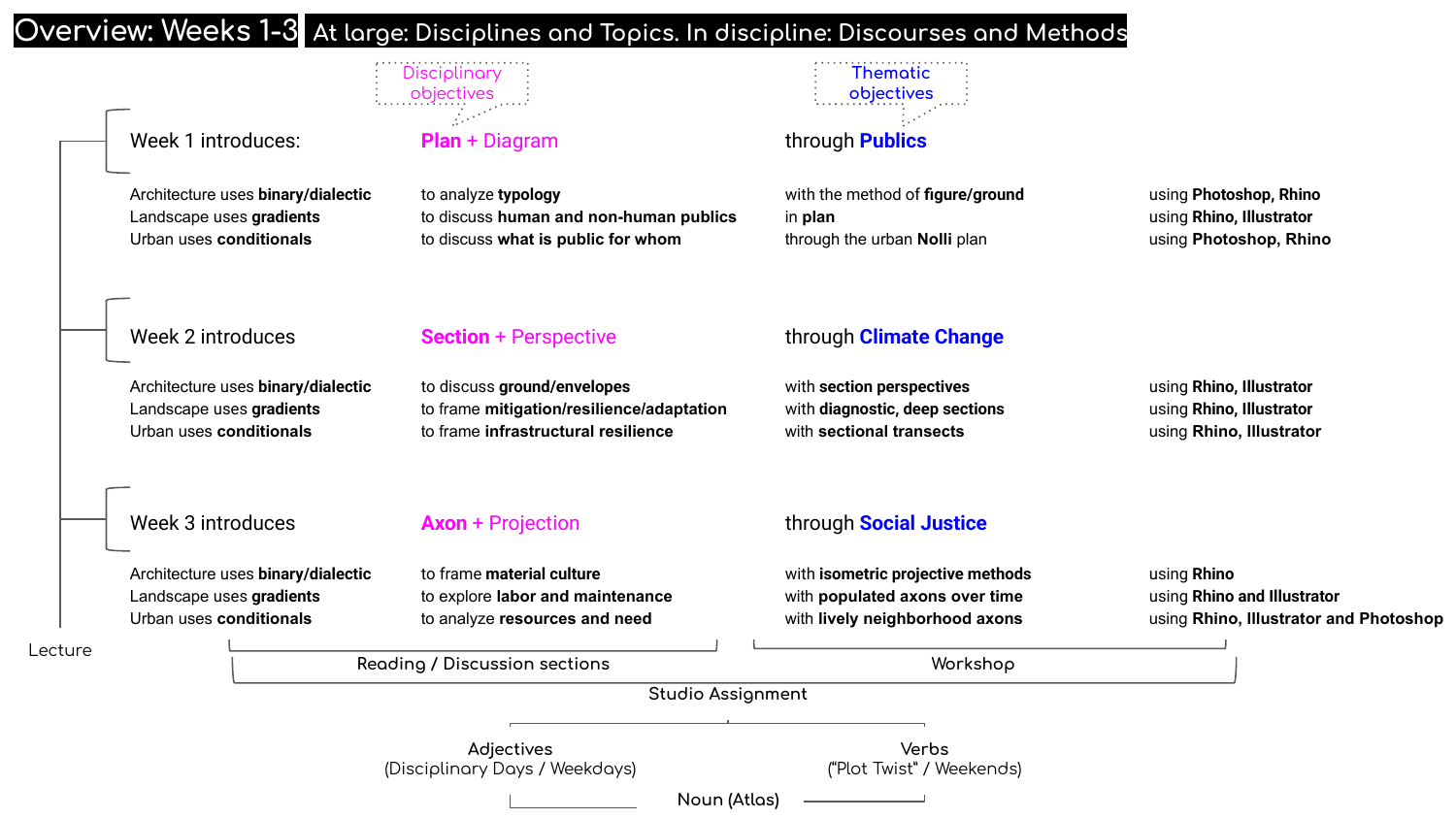
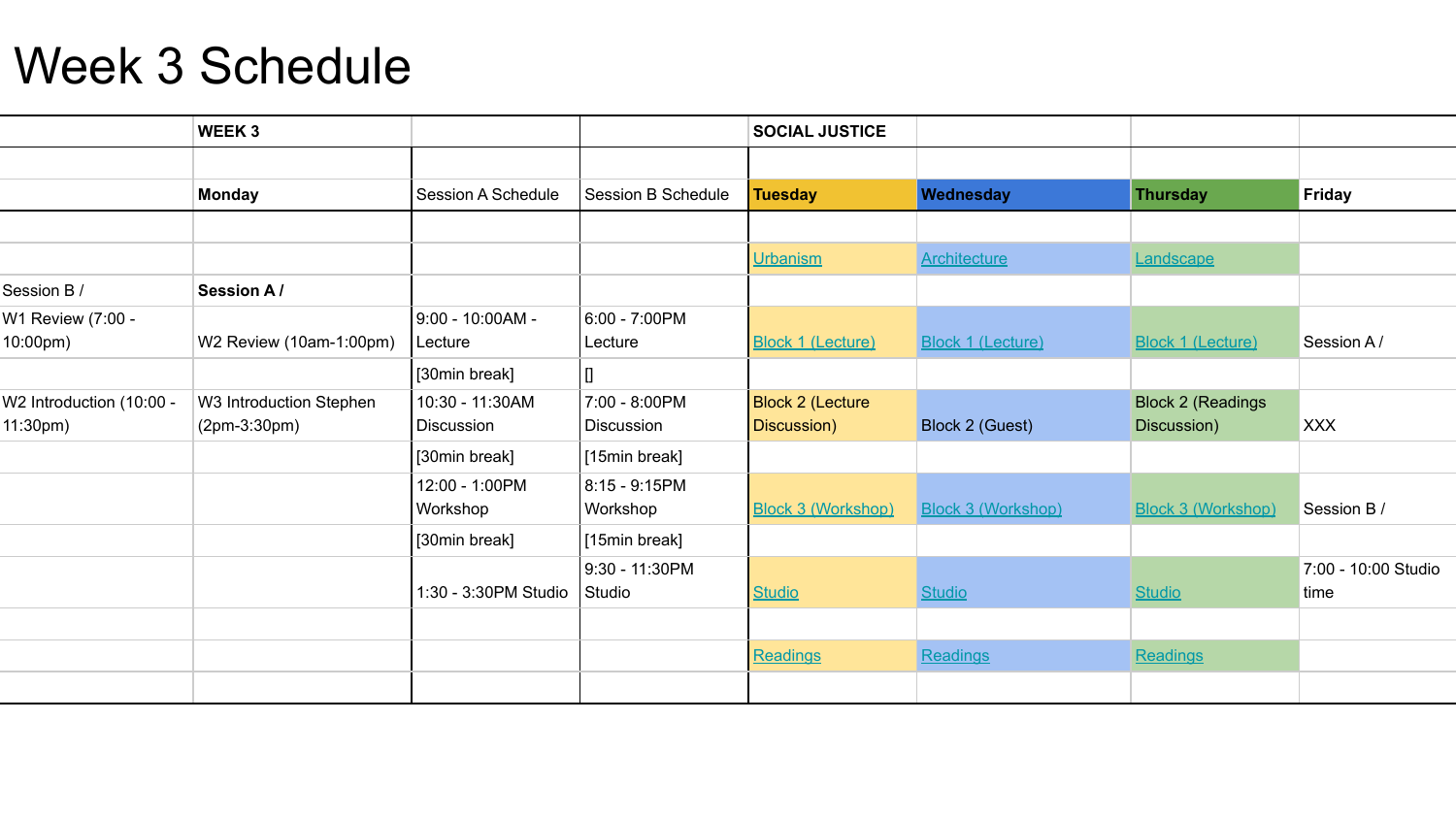
Fig. 02 — The 3x3x3 toolkit — a combinatorial curriculum where every dimension rotates daily
Fig. 03 — Weekly overview of disciplines and topics
Fig. 04 — Detailed matrix mapping methods, representations, and software across weeks
Fig. 05 — Global scheduling — orchestrating lectures, discussions, and studio time across multiple time zones.
The Design: Measuring "distance traveled" over static grades.
I architected the overarching curriculum and its underlying pedagogical framework. I also replaced standard grading with a growth-focused assessment model. Instead of judging students on the polish of their final deliverables, we evaluated their "distance traveled"—measuring how much their spatial reasoning and design thinking improved through iterative practice.
The Research: Scaling a teacher's impact through tools.
My Irving Innovation Fellowship research provided the foundation for this system. Rather than trying to scale a teacher's personal time, I codified our methods into comprehensive pedagogical assets—including a complete 'Guidebook for Virtual Learning' and a '3x3x3' curriculum workbook—allowing the system to scale globally without losing its rigor.
The Result: 200 students a year from 21 countries.
The program scaled to 200+ participants from 21 countries per year, maintaining a strict 10:1 student-to-teacher ratio. More importantly, it evolved into a powerful community platform connecting graduate mentors with incredibly diverse cohorts—ranging from foreign undergraduates to an indigenous leader from New Mexico using the program to learn how to design and rebuild affordable housing in their community.
Design Discovery — Student Evaluation
Exercise 1: Extract and Deploy
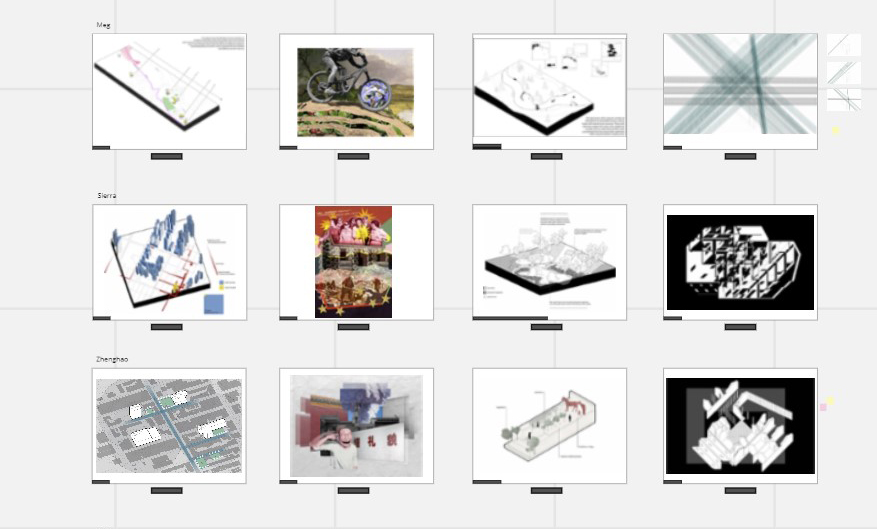
The first exercise consisted of a precedent study through diagramming ("extract") and a brief application of the precedent to a small site ("deploy"). The student's diagrams for the precedent study were very strong and included some novel categories of analysis that were thought-provoking. Initially, they struggled to understand the assigned precedent and the level of abstraction required for the exercise, but quickly overcame this over the course of a few desk critiques. Their application of the precedent to the campus site was somewhat underdeveloped compared to the initial study; I would encourage them to embrace the use of topography in the design exercise and further develop the spatial hierarchy and variety of experiences.
Exercise 2: Analyze and Frame
The second exercise consisted of a collective site analysis assignment and framing a design problem through a set of drawings at different scales. This is a challenging exercise because students had to write their own briefs for the next design project, which in some ways is more difficult than standard first-year core studios. In framing the design project, the student focused on a highly complex and challenging urban boundary. While they initially struggled to define a specific intervention, they successfully arrived at a design brief that aimed to increase public access to open space and create spatial coherence across the campus edge.