Spacemaker AI → Autodesk
Research Engineer
May 2019 – Jan 2021
Led research translating domain workflows into generative design systems, then into production tools for civil engineers. Studied workflows with government and private developers to move the platform from proof-of-concept to a trusted tool, enabling North American market adoption.
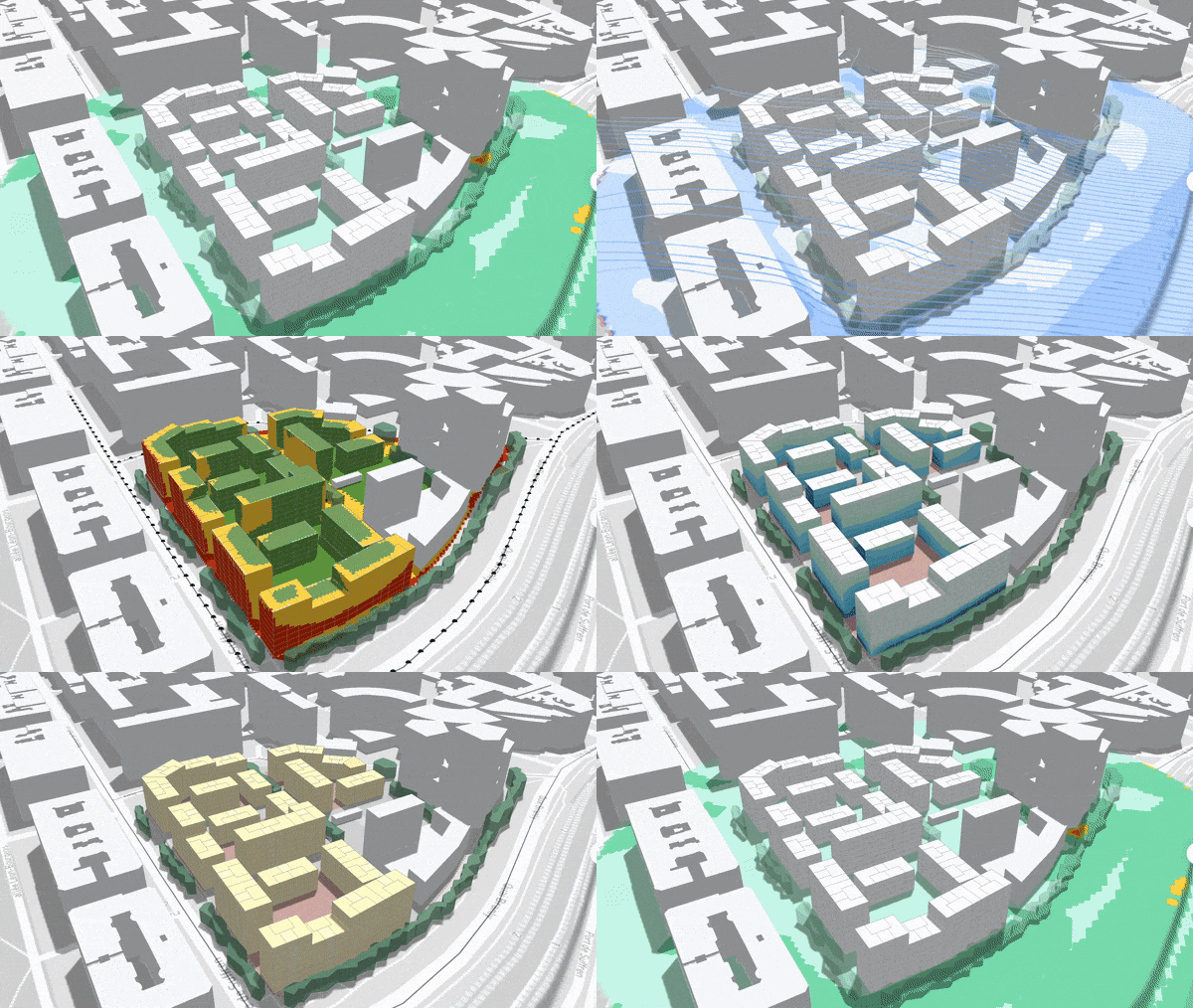
The Problem: Two bottlenecks blocking North American adoption.
Spacemaker's generative design platform worked well in Scandinavian markets, where zoning codes are relatively uniform. American zoning was a fundamentally different problem: thousands of municipalities, each with their own setback rules, height limits, FAR calculations, and overlay districts. The existing rule engine couldn't represent this combinatorial complexity. Separately, the environmental simulations (wind, sunlight, noise, daylight) required heavy computation. Every time a designer adjusted building geometry, the interface froze waiting for a full physics pass, breaking the core promise of real-time design exploration.
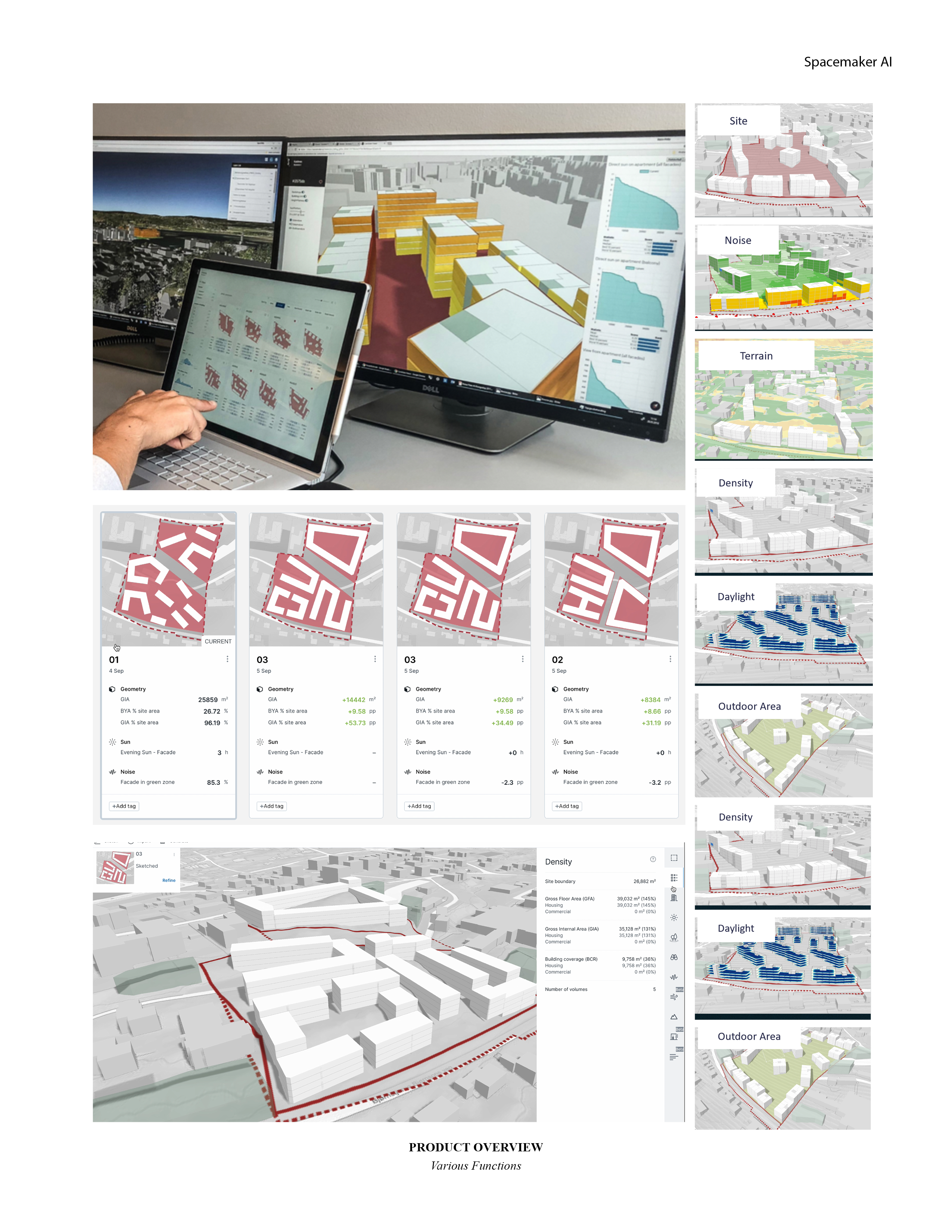
The Architecture: Modeling US building constraints and physics approximation.
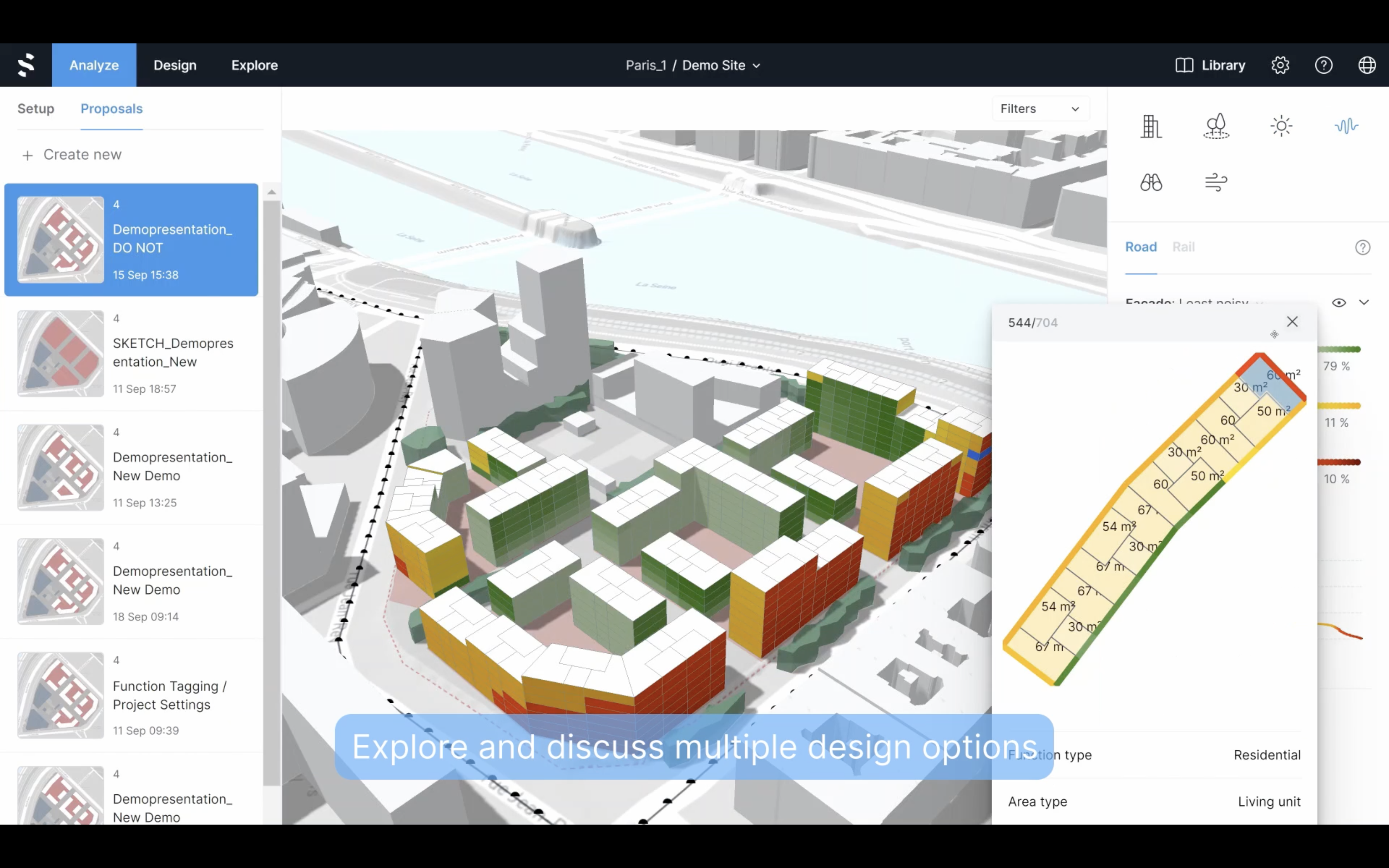
I researched US zoning codes and modeled the combinatorial complexity of American building regulations into machine-readable rules the backend could process. I also used mesh simplification to convert heavy 3D data into lightweight previews, allowing the app to show instant rough results rather than making users wait for full simulations that could take up to an hour.
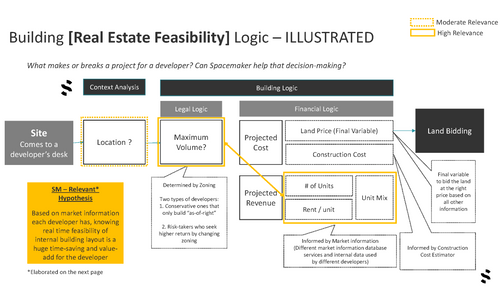
US Building Logic — zoning rule visualization.
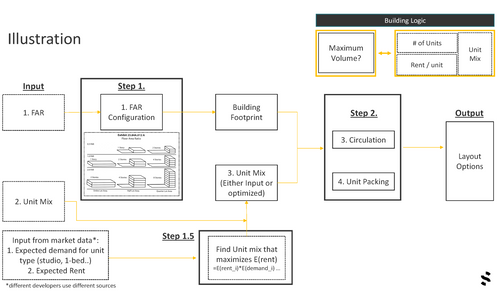
US Building Logic — setback and height constraints.
The Interaction: Balancing latency and reliability.
I designed the system to run high-accuracy simulations in the background, so architects could move buildings and get immediate feedback without the screen ever freezing. Designed interaction patterns that enhanced user agency, allowing engineers to steer preferences in the output qualities while the AI handled the underlying constraint solving. I validated the approach by talking to government and private developers to confirm the tool correctly navigated US regulations and genuinely improved their workflow.
The Impact: Unblocking the North American market.
The US Building Logic pipeline proved that complex, localized regulatory constraints could be computed in real time. This technical unlock opened the North American market, driving the 4x increase in top-of-the-funnel engagement. Successfully shipped as a premium paid feature.