Spatiometrics
Founding Engineer / Design Technology Lead
2021
Founding engineer at an NSF-funded startup. I built systems that translated complex hospital floor plans into topological graphs—allowing public health planners and hospital operators to rigorously model critical travel distances and spatial relationships.
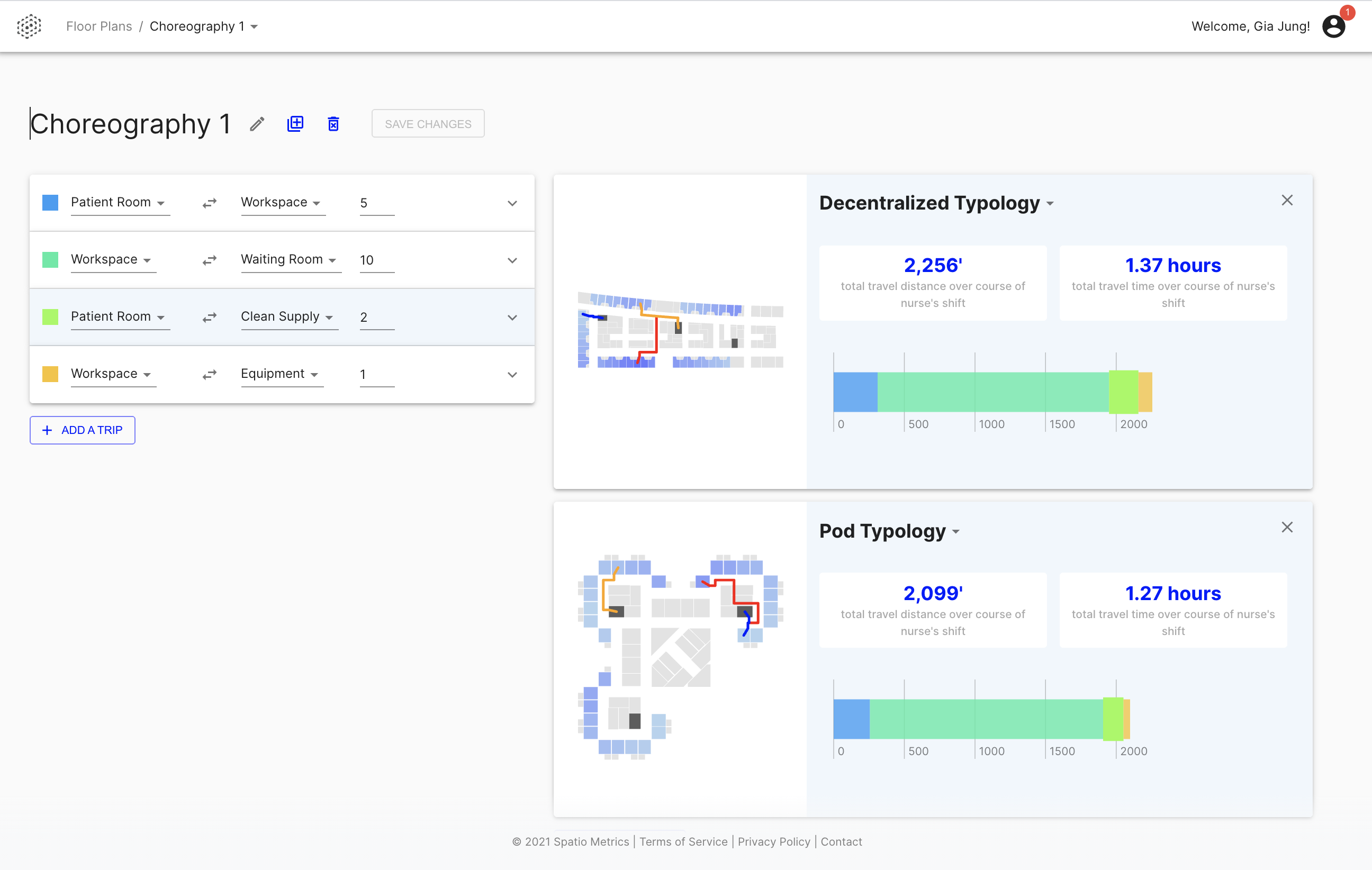
The Problem: Hospital planners can't measure what they can't see.
Hospital floor plans are static drawings that are difficult to evaluate. Planners need to measure how a layout affects staff efficiency and patient care — like nurse travel distances and visual connectivity — before a building is constructed.
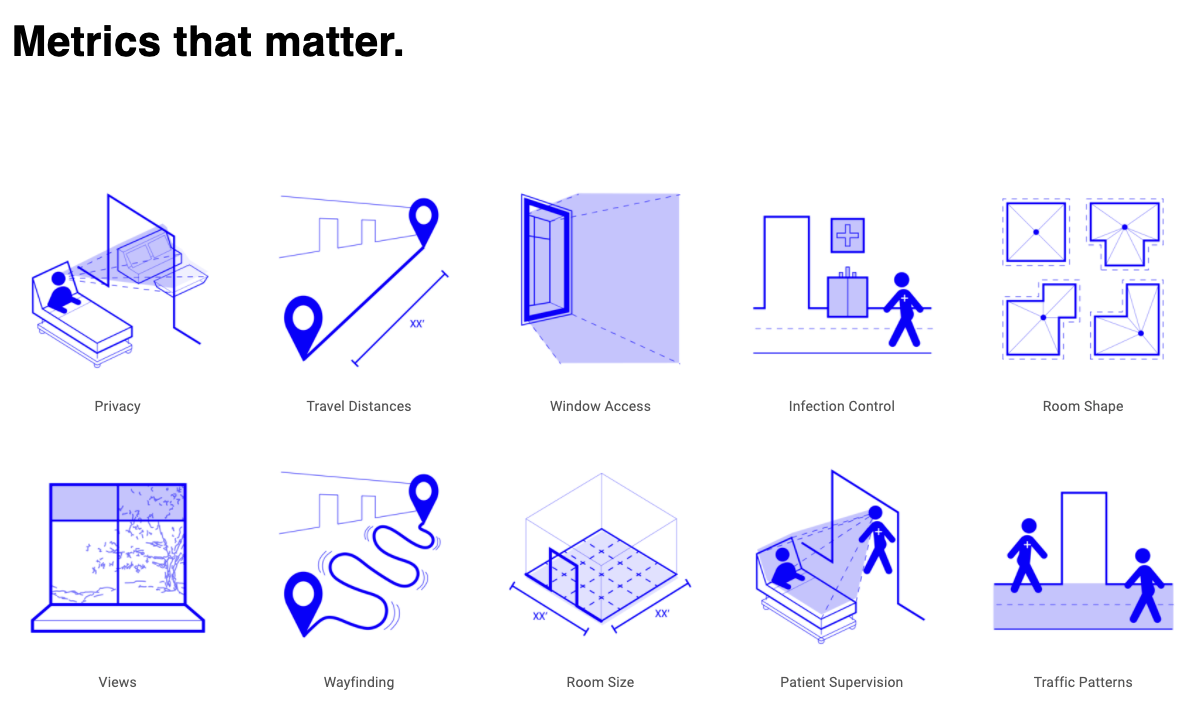
The Architecture: Floor plans become graph networks.
I wrote computational geometry code in C# and Grasshopper to turn 2D drawings into mathematical graph networks — walls and doors become nodes and edges that a computer can measure. I then built the full stack: a Python backend for heavy compute and a React frontend to display results via REST APIs.
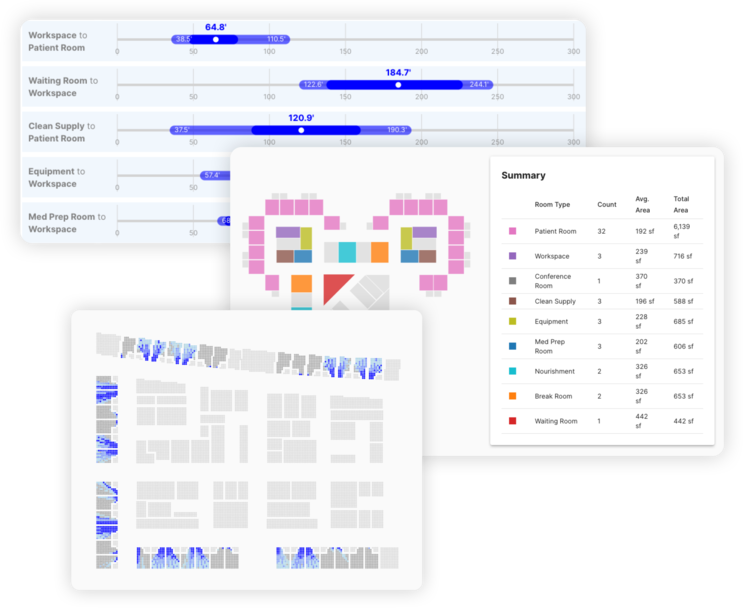
The Interaction: Heatmaps for non-technical hospital managers.
I designed the dashboard so non-technical users, like hospital managers, could instantly toggle between different metrics. They could see a heatmap of "nurse-travel-time" or "patient-visibility" without needing to understand the underlying geometry or math.
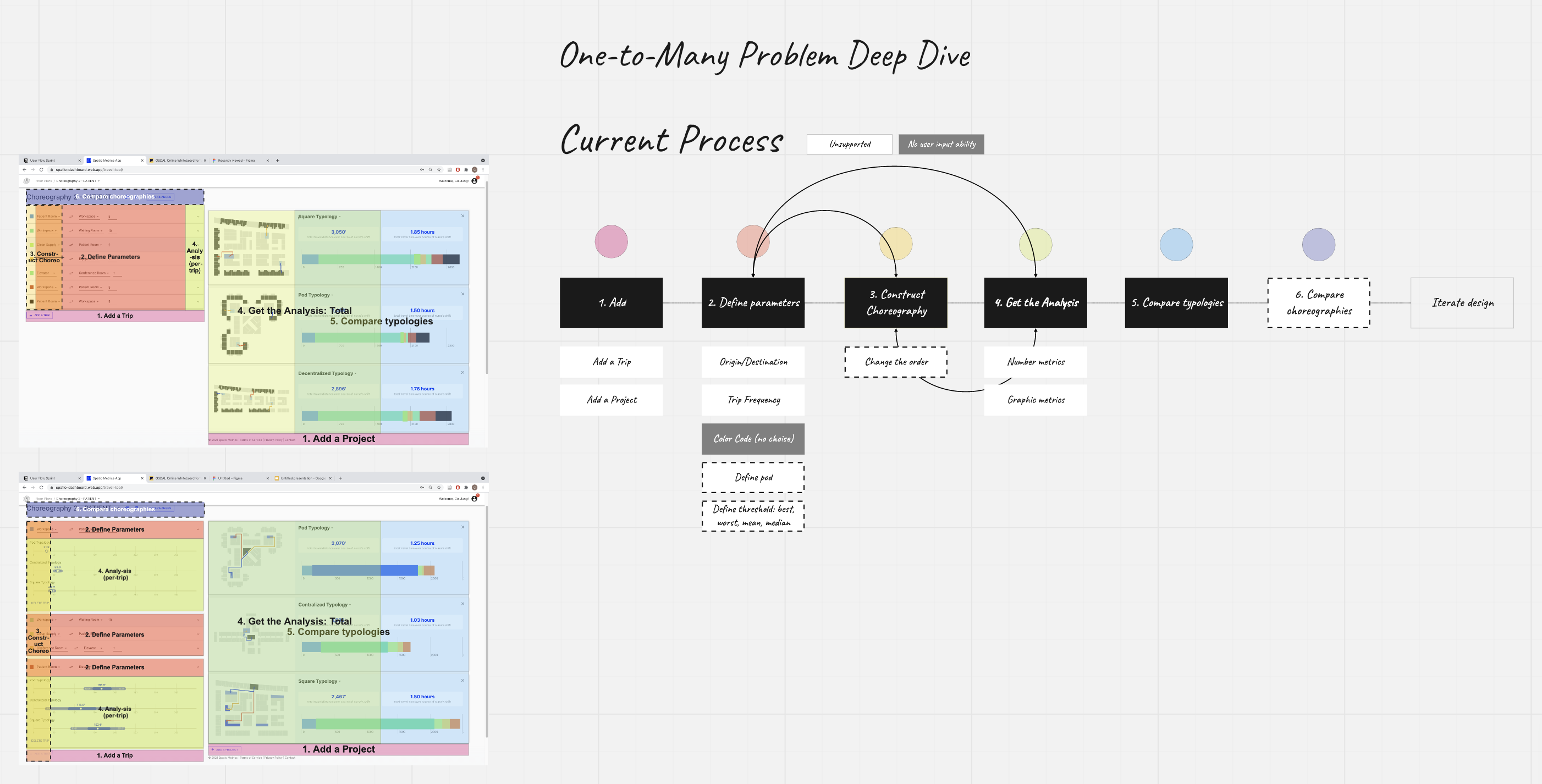
Information architecture — dashboard metric hierarchy.
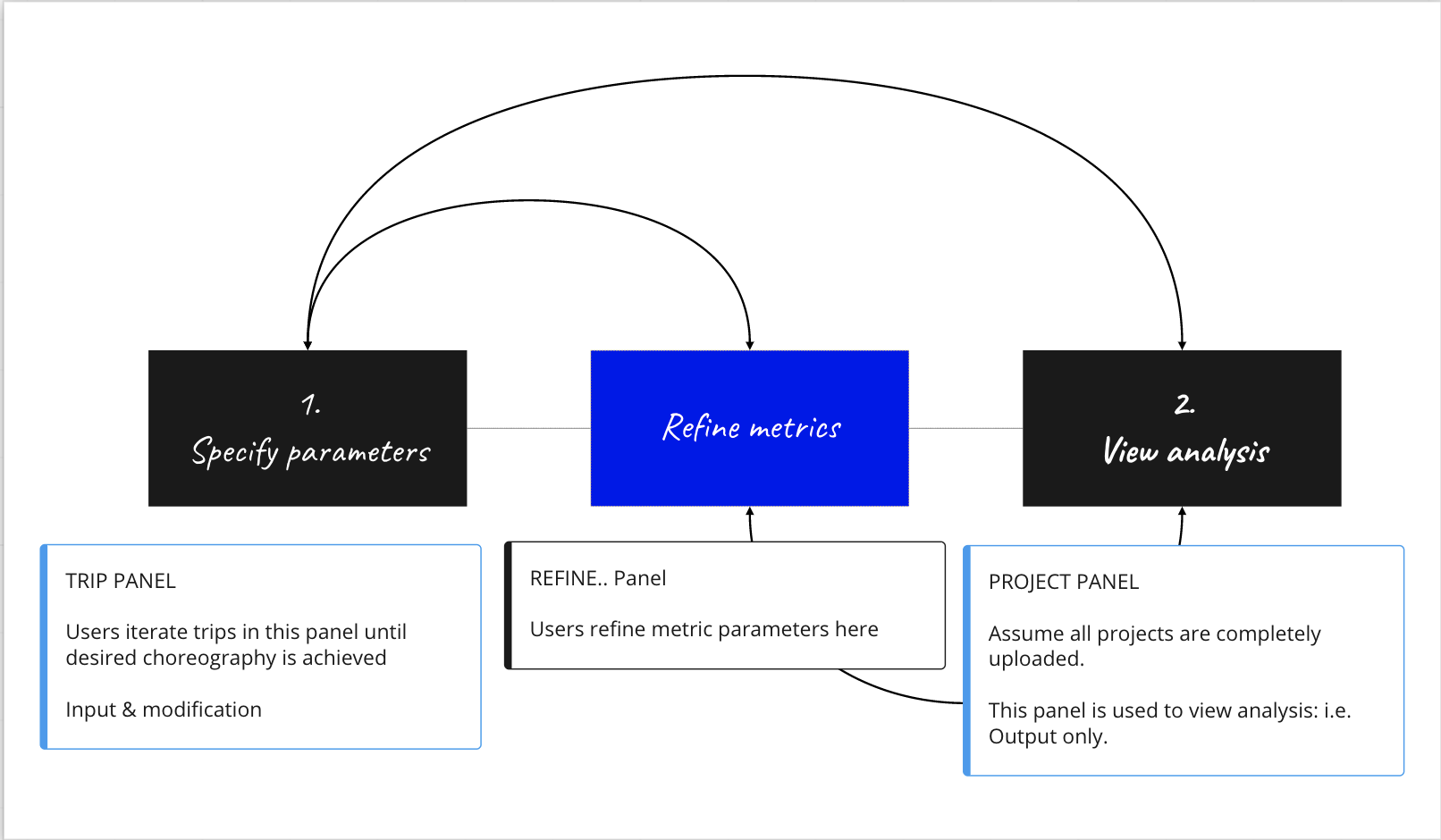
User flow — from floor plan upload to heatmap analysis.
The Impact: Enterprise adoption.
As founding engineer, I shipped the core product from concept to production, leading to the company's first enterprise adoptions.