Harvard MDE: AI Systems for Social Impact
Adjunct Teaching Faculty (Design Engineering, HCI) · Harvard University
2025–Present
I lead a course at Harvard where students build AI systems for social impact. Students from diverse backgrounds apply their theory of change into high-stakes domains such as health, crisis response, and robotics.
The impact: Learning by doing—beyond formal education.
For example, students with no technical background successfully built full AI software stacks, and those with no design background engineered functional soft robotics devices. As one of my students reflected: "We thought we could do 8 out of 10. She showed us we could do 1,000 — and we did."
The Scaffolding: Designing individualized learning journeys.
I serve as the primary advisor across the entire design engineering stack. Because there is no one-size-fits-all approach to building complex systems, I design custom pedagogical scaffolding for each team. I guide their theory of change, rigorous HCI research methods, and critical design frameworks while simultaneously directing their technical architecture. As a result, I equip them to independently elevate their work from theoretical concepts to functional, high-stakes prototypes.
The Pedagogical Framework: Six stages from identify to defend.
1
Identify a theory of change
What sociotechnical problem are you intervening in? What conditions make a new situation possible? Literature review, systems mapping, three hypotheses.
2
Engage the people it affects
Interview domain experts and potential users. Build empathy maps. Map the current state before proposing anything.
3
Specify and sketch
Translate research into a minimum viable specification. Three alternative sketches: digital, physical, AI-assisted. Back-of-envelope feasibility for each.
4
Build and test with real people
Physical prototype, user feedback, iteration. The prototype is an argument, not a finished product.
5
Make it work
Functional prototype. Show the system operating, not just looking right. Separate 'looks-like' from 'works-like.'
6
Defend it
Present with evidence: problem setup, works-like demo, impact metrics, evolutionary record of prototypes. Structured like a research defense, not a pitch.
Selected Outcomes: Four teams, four AI systems.
Trace: Spatial Memory Assistant
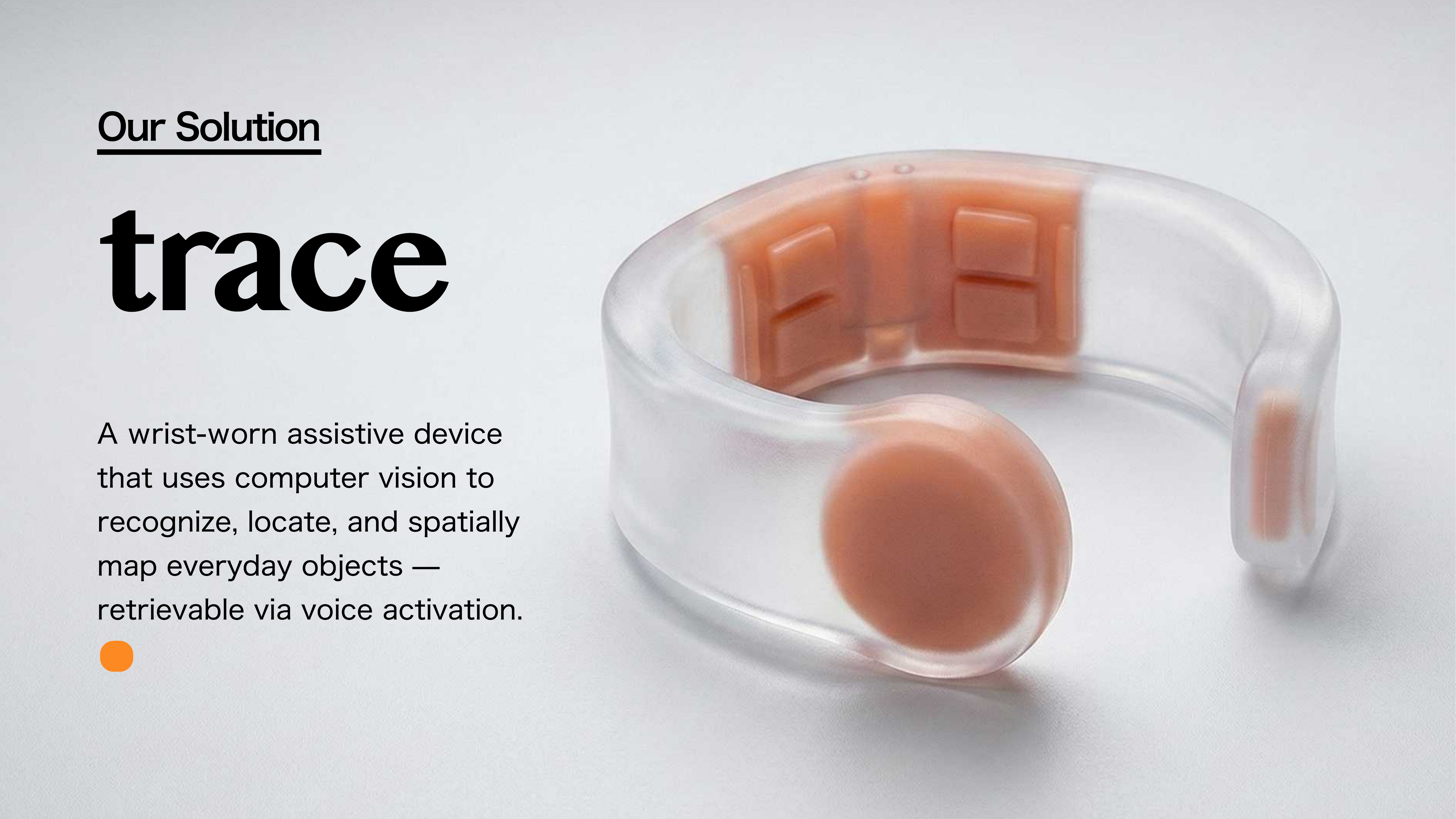
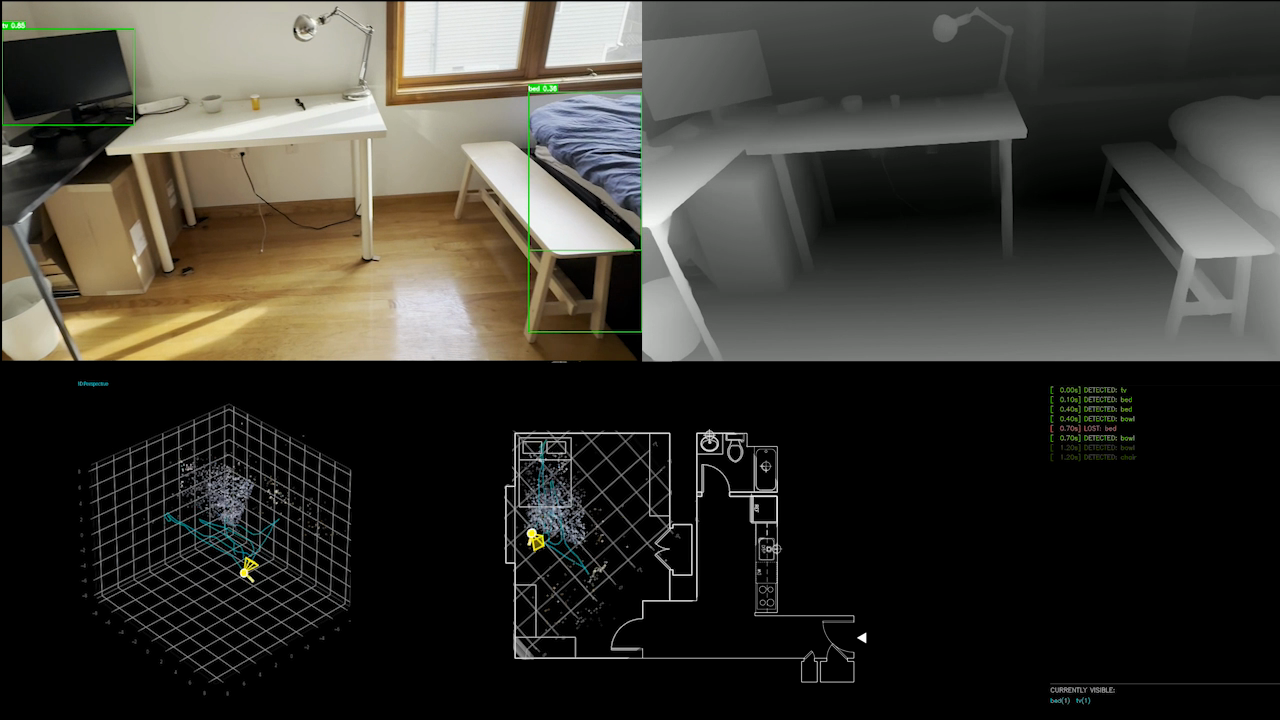
A wrist-worn assistive device for people with mild cognitive impairment that passively logs everyday objects through an egocentric camera activated by EMG gesture detection. The system combines YOLO object detection with monocular depth estimation (Depth Anything) and offline 3D scene reconstruction (COLMAP/NeRF) to build a persistent spatial map of the home. Users ask "where is my...?" by voice; an LLM cross-references object logs with 3D coordinates and responds through a cloned caregiver voice via ElevenLabs. A data analytics layer tracks object entropy and routine stability over time — surfacing early signals of cognitive drift to caregivers before clinical thresholds are reached.
Tech Pipeline
Breathe: Somatic Health Wearable
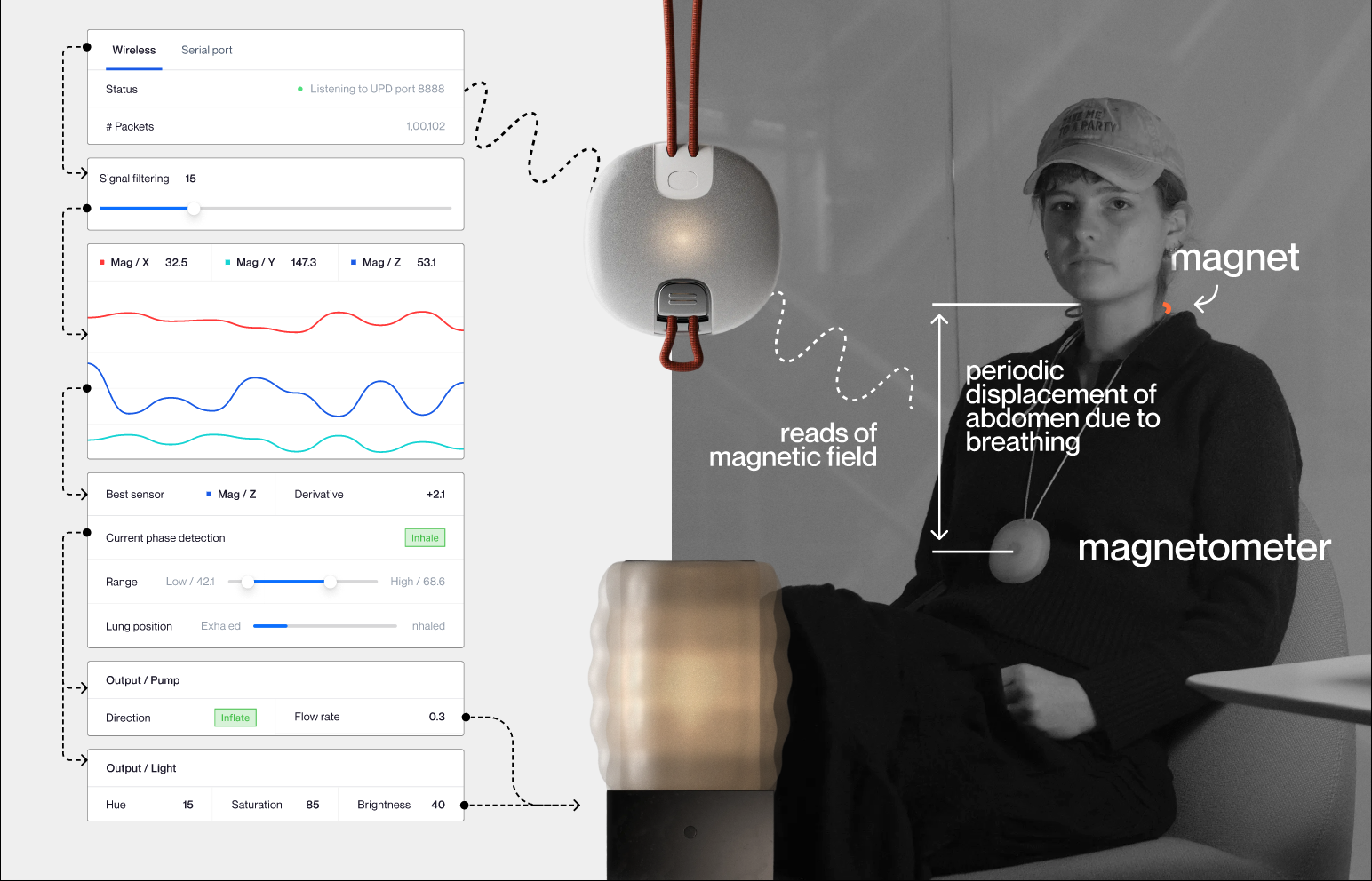
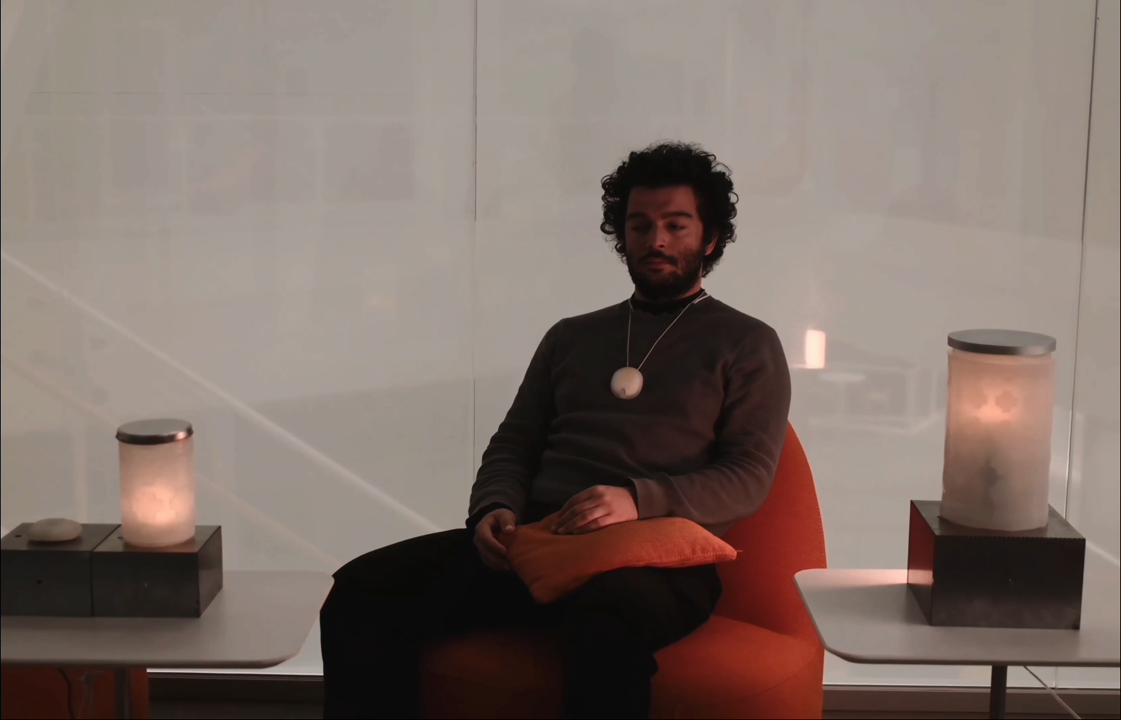
A two-part breathing awareness system that makes the invisible act of respiration tangible. A pebble-shaped wearable — worn as a pendant or belt — uses a magnetometer to detect abdominal displacement from a small magnet placed on the body, tracking breath phase, depth, and rhythm without restrictive chest straps. The data drives a soft robotic tabletop lamp whose translucent silicone form physically inflates and deflates in sync with the wearer's breathing, while shifting light guides the user toward slower, deeper patterns. Built on the insight that breathing is our only vital system that is both fully automatic and under conscious control, Breathe bridges digital sensing with embodied physical feedback to help users understand and regulate their respiratory health.
Device Demo
Firekin: Wildland Firefighter Safety
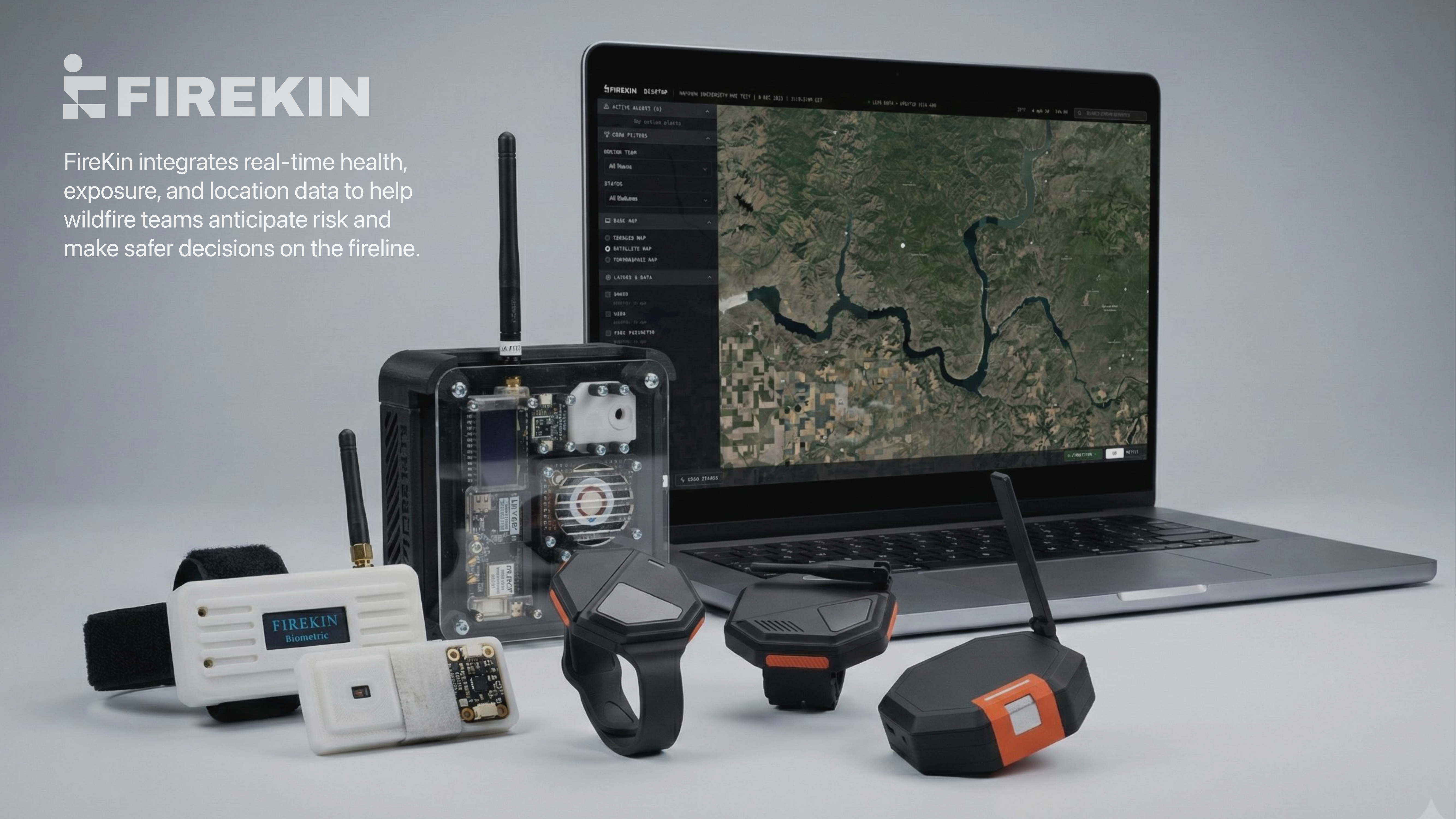
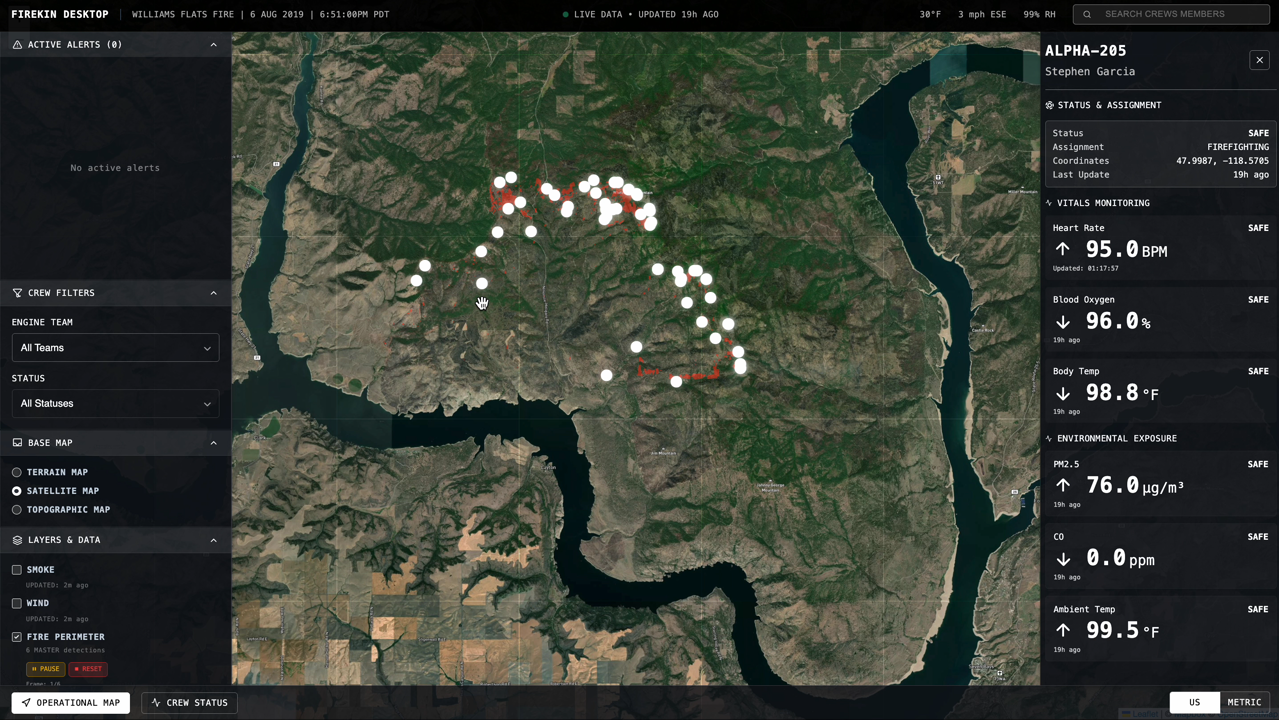
A three-device IoT mesh network for wildland firefighter safety, built for off-grid environments beyond cellular coverage. A wrist-worn biometric sensor tracks core temperature, heart rate, and SpO2; a shoulder-mounted environment unit monitors ambient heat, CO, PM2.5, and GPS position via LoRa radio; and a base station relays all telemetry to a command-level geospatial dashboard with live fire perimeter, weather, and satellite data. The system runs complex event processing to detect heat stroke, CO poisoning, and man-down conditions in real time.
Fire Simulation
Myce: Bio-Hybrid Cryptography
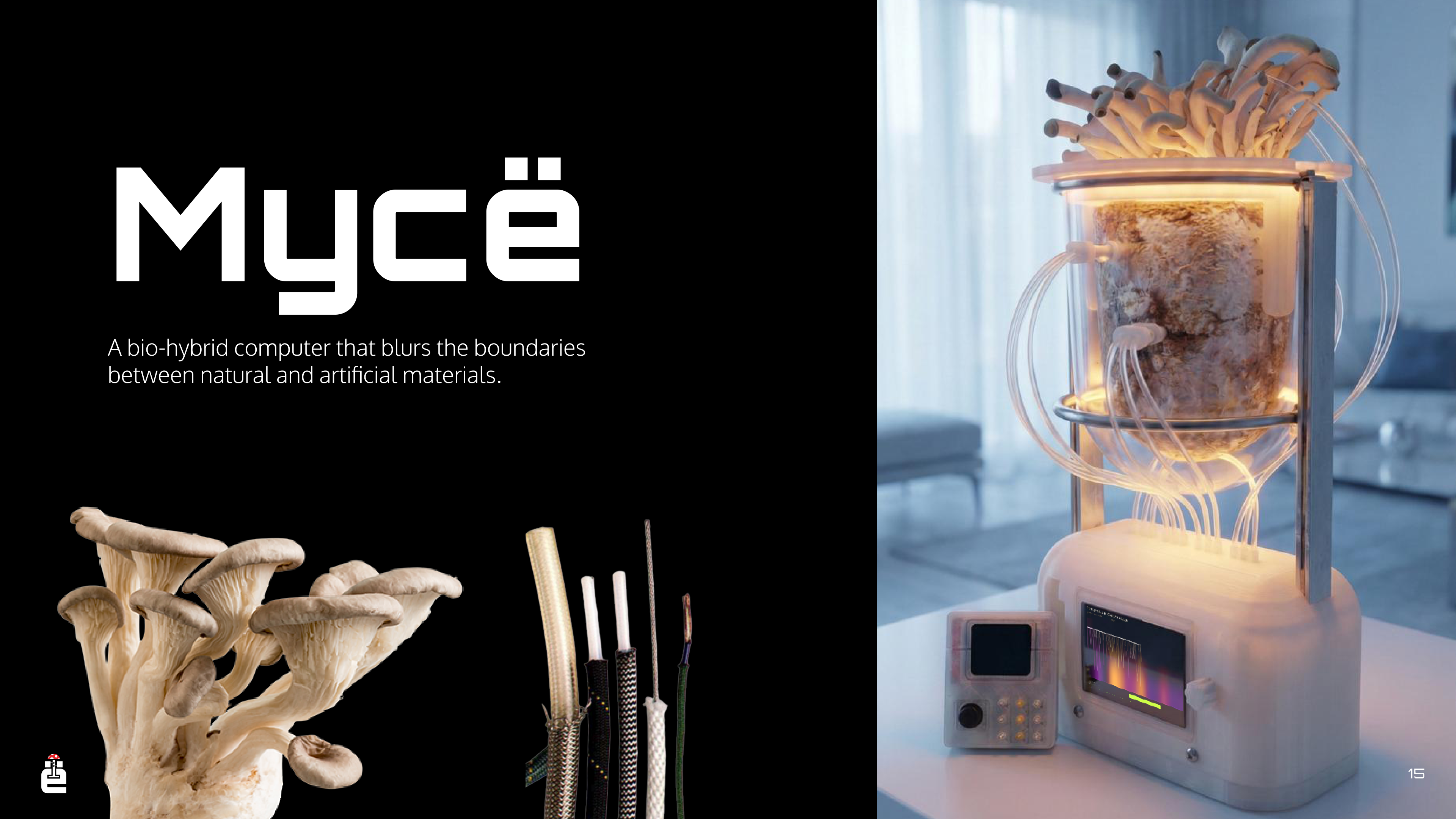
A bio-hybrid computer that harvests micro-voltage electrical signals from living mycelium to generate true random numbers — validated against NIST standards and used to produce RSA cryptographic keys. Custom Arduino Nano + ADS1256 ADC hardware ($80 vs $800 commercial) feeds a pipeline of signal cleaning, PCA decomposition, and hashing inside a 3D-printed enclosure with a translucent growth chamber.

Product Video
The Impact: Every team shipped working hardware and production code.
100% of my student teams successfully shipped working hardware and production-level code. These frameworks have helped over 1,200 people at Harvard expand what they are capable of doing with AI.